
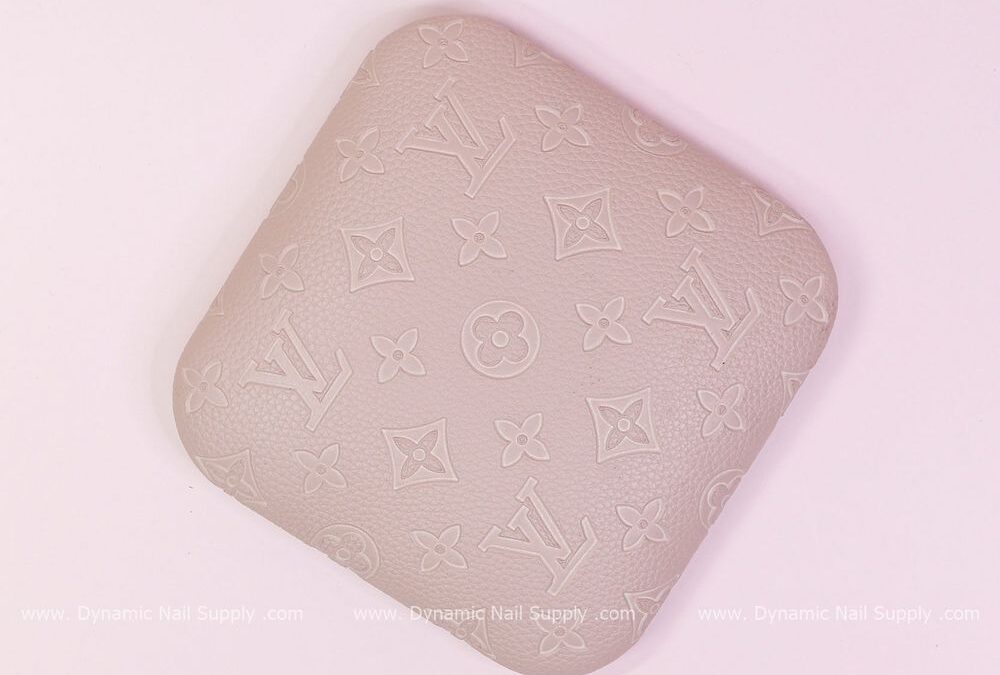
Quick answer: For steadier freehand strokes and less wrist fatigue, position the client’s forearm so the elbow rests on the blush-beige pebbled pad with the hand slightly forward and the wrist neutral. The pad’s pebbled surface and subtle debossed motif help stabilize both client and tech while you work.
Set up your station for calm ergonomics
Start by arranging your chair, table height, and the beige pebbled elbow pad so you can sit upright with relaxed shoulders. You want your elbows at roughly the same level as the work surface — not hunched and not reaching. If the table feels high, raise your chair; if it’s low, lower your seat or add a slim riser under the pad.
The blush-beige pad’s matte, textured surface resists sliding, which is helpful for beginners who shift position often. Place the pad so the client’s elbow aligns with the center of the cushion; the hand should sit just past the front edge of the pad, allowing access to the nail without the client overextending the wrist.
Position the client’s arm for steady access
- Ask the client to rest their forearm across the pad with the elbow at the highest point of the cushion.
- Have their hand face down naturally; adjust the wrist so it’s neutral, not bent up or dropped down.
- If you need finer control, slide a small folded towel under the palm to tilt the fingers toward you by a few degrees.
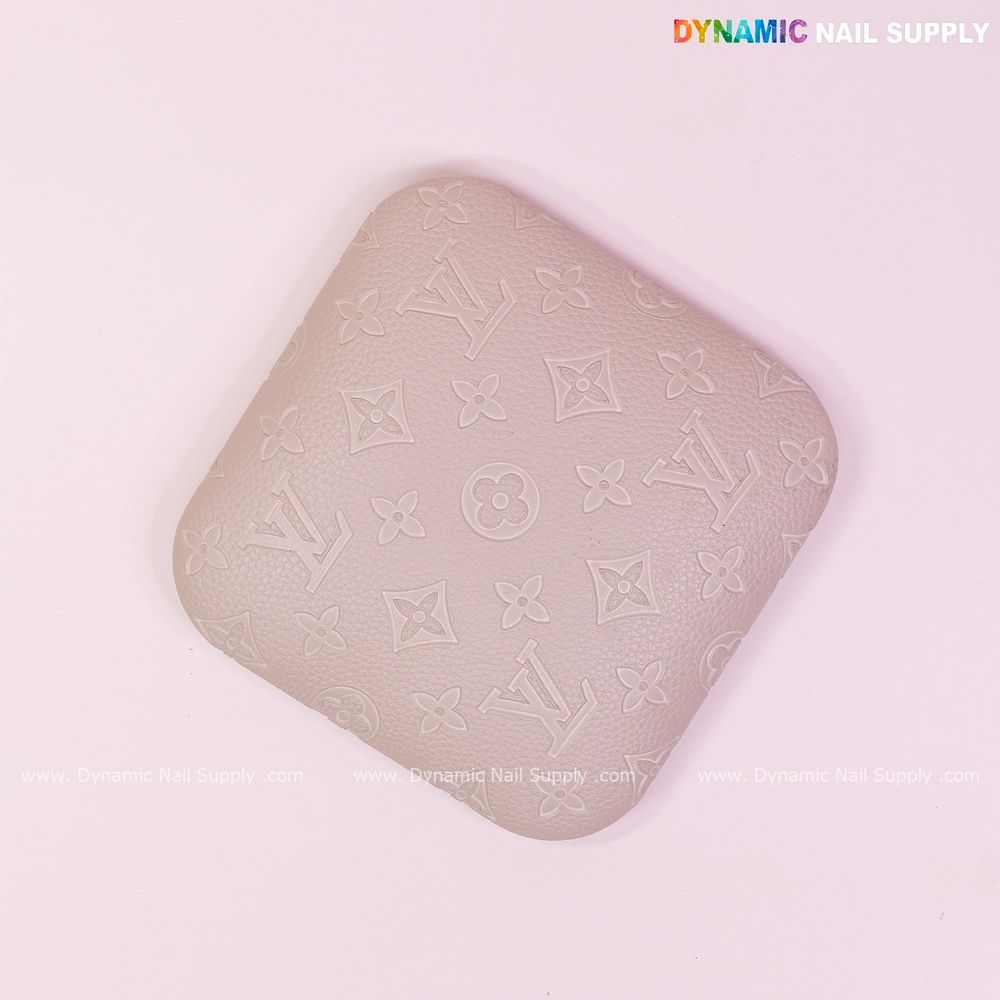
That blush-beige surface with the cream-beige debossed pattern gives subtle tactile feedback; your client will instinctively stop small lateral movements, which is a quiet help for precise line work or tiny details.
Where you sit, how you hold tools, and why it matters
Sit so your forearms form a relaxed triangle with the work surface. Your dominant hand should rest lightly on the table or the client’s hand (if the design needs it). Use your non-dominant hand to steady the finger at the base or sides — not the cuticle directly — letting the pad support most of the weight.
Beginners often grip the brush too tightly or brace the wrist against the table. Instead, hold the brush like a pencil and use small wrist rotations for fine strokes. The pad’s cushioning reduces the need to press into the client’s arm for stability, which helps maintain softer, more controlled movements.
Common beginner mistakes and how this pad helps
- Overreaching: If you strain forward, reposition your chair rather than leaning. The compact pad is easy to move so you don’t have to contort your posture.
- Client slipping: Beginners sometimes lose a steady surface. The non-slip base and pebbled grain minimize slide during longer services.
- Wrist torque: New techs pull the wrist into awkward angles. Keeping the hand just beyond the pad’s front edge supports a neutral wrist and reduces torque.
Step-by-step for a precise freehand flourish
- Seat yourself and the client so both shoulders are relaxed.
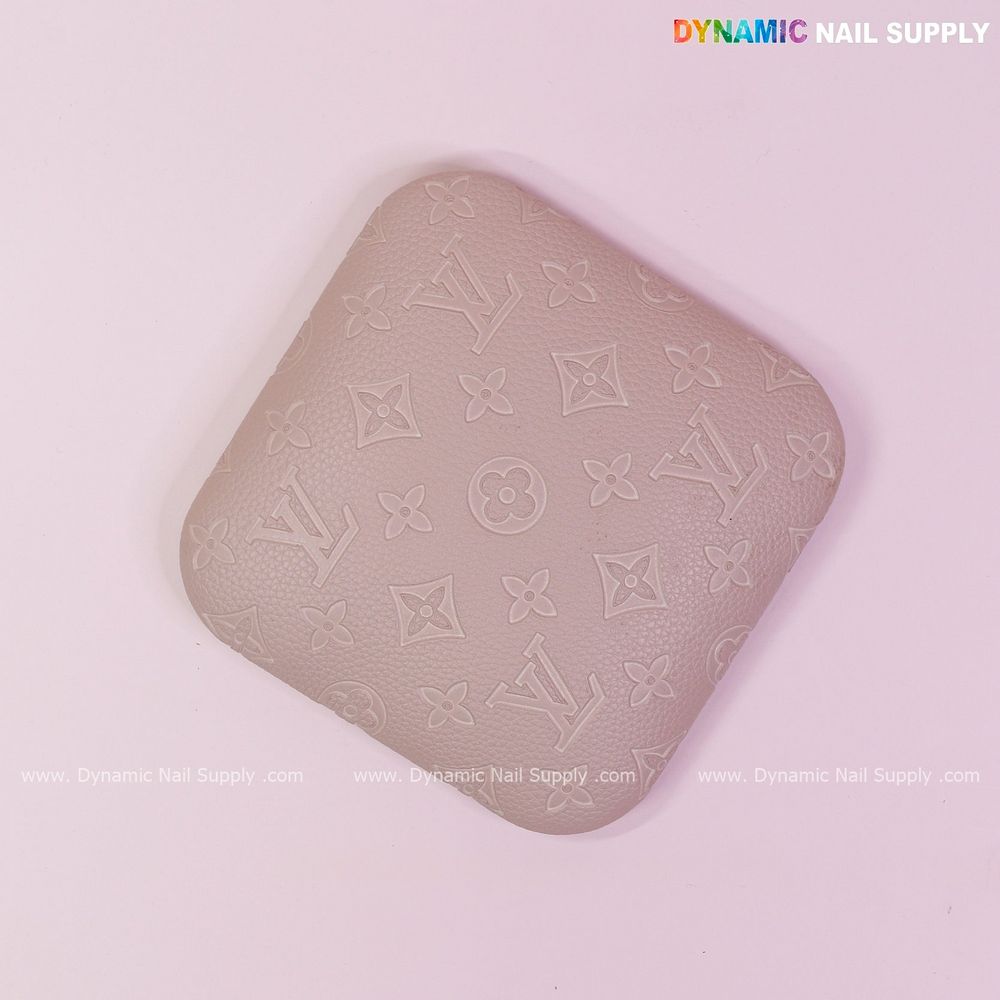
- Place the blush-beige elbow pad under the client’s forearm with the debossed motif centered beneath the elbow.
- Set the palm to rest lightly on the table edge or a small towel so the fingers angle toward you.
- Use your non-dominant hand to steady the finger near the knuckle; let the pad carry the elbow weight.
- Execute thin lines with short brush strokes, returning to the pad between strokes to re-stabilize.
Care and sensible handling
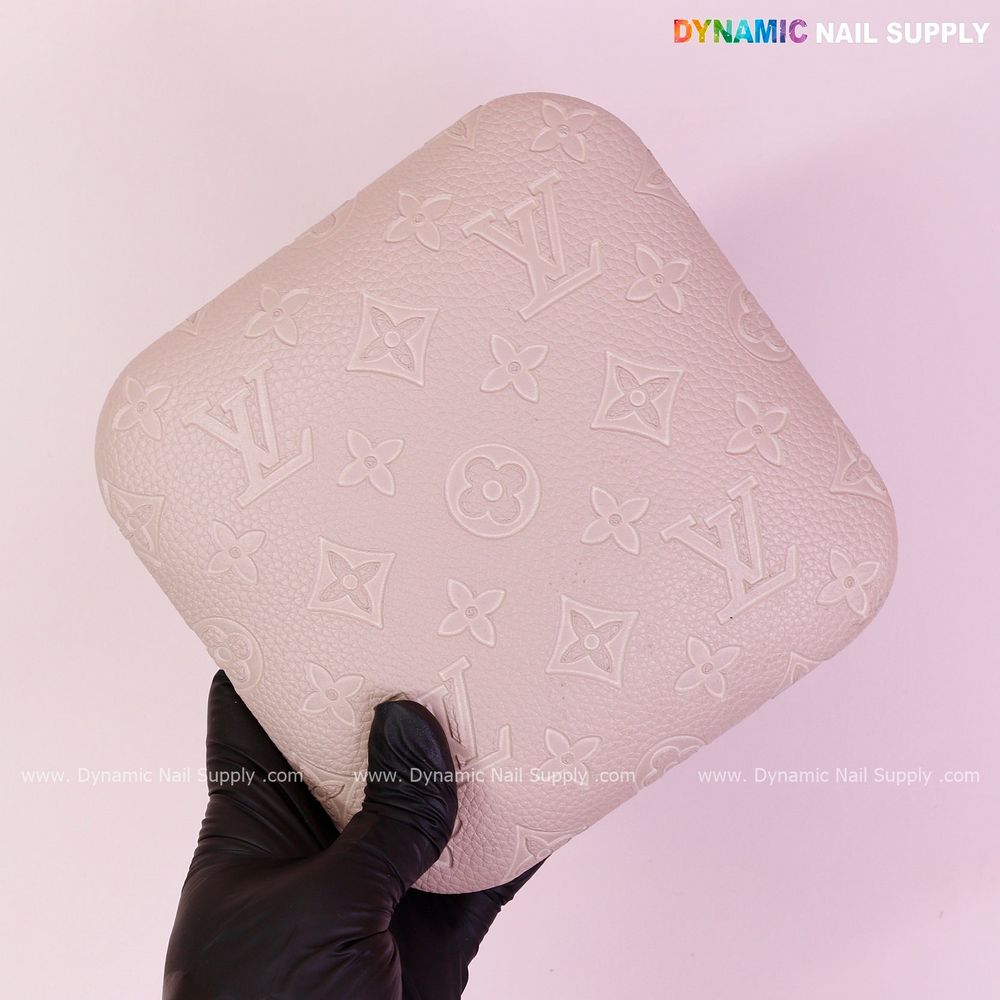
The pad’s matte, waterproof surface wipes clean with a damp cloth. Avoid corrosive cleaners or bleach that could dull the debossed motif. Let the pad air dry fully between clients. Because it’s compact and portable, you can quickly reposition it during mobile work or store it flat to preserve shape.
Best for
- Beginners learning steady freehand strokes
- Long services where elbow comfort matters
- Small salons and mobile tech kits where portability helps
- Clients who prefer a neutral, feminine studio aesthetic
Not ideal for
- Techs who need an adjustable-height armrest for medical conditions
- Setups requiring high-gloss reflective surfaces for photography
- Those who will saturate the pad with liquids or harsh chemicals
If you want a simple, tactile support that encourages neutral wrist alignment and steadier brush control, the blush-beige pebbled elbow pad is a practical beginner tool; prices may change but this style is commonly available for an accessible price. When you’re ready to test placement in a real appointment, place the elbow on the pad, settle into your posture, and make three practice strokes to confirm stability — then begin the set.
For a quick station check before your next client, rest the forearm on Beige LV Engrave elbow pad and make three steady practice strokes to confirm your setup.